
Taiwan: 14-day itinerary
How to get the most out of two weeks in Taiwan
Posted by: Josh, 15 March 2026
Fourteen days is a great amount of time to spend in Taiwan, although you will still have to make some judgement calls on where you want to prioritise visiting and what places and activities you’re willing to skip. This two-week Taiwan itinerary starts in Taipei, takes you to Hualien on the East coast for a few days, and then doubles back down the west side of Taiwan to end at Kaohsiung in the South.
This is a full-on schedule and involves a fair amount of moving around. Consider it the itinerary to do if you are feeling up for two weeks of non-stop travel.
If that sounds a bit too hectic for your tastes or if you need a couple more rest days when travelling to manage your energy or any anxious feelings, treat this as a starting point for planning your trip. With Liz’s help, I’ve included some alternative suggestions at the end for a more relaxing Taiwan two-week itinerary.

Contents
Days 1-3: Taipei
Read our guide to Taipei to find out more about what to do, where to eat, and what to know before visiting

On your first day, you might want to see some of Taipei’s main tourist destinations. In each of our itineraries – seven days, 14 days and 28 days – we recommend a visit to the National Palace Museum, which is open from 10am-5pm. With three days, if learning about history and seeing some traditional art is your thing, you could even dedicate a whole day to seeing the museum.
If you’re wanting to pack more things into day one, you could spend a couple of hours at the museum before taking the Metro towards Dihua Street, a traditional old street packed with shops and market stalls. And if by now you're in need of a decent coffee or a snack, stop in at Perfect Days coffee shop. You’ll also find plenty of places to eat round here: we had a selection of the vegetarian food offered at a restaurant adjoined to the small temple at the southern end of Dihua Street, not far from Perfect Days, but there’s several other places to choose from.
After lunch, it’s either a long walk or short Metro trip to Chiang Kai Shek Memorial Hall. Finally, to finish the day’s activities, it’s just over 20 minutes on the Metro to get to Taiwan’s tallest building, Taipei 101, to watch sunset over the city.


Assuming you’re jetlagged, it might be time to start heading back to your hotel and finding dinner nearby. But if you still want to do a little more exploring, you could spend the evening at one of Taipei’s most well-known night markets. The brightly lit Ximending Night Market is a 25-minute Metro journey away, while Shilin Night Market – where you can find the best sesame noodles we ate in Taiwan - is around 10 minutes further away.
On your second day, why not take a day trip outside of the city? Some options to consider include Houtong Cat Village (which I loved) and Jioufen (which wasn’t my thing, but is very popular with others), or Wulai – famous for its hot springs and its waterfall. If I had to recommend just one, Wulai would be my pick. Easily reachable by bus, a day in Wulai lets you experience some of Taiwan’s natural beauty, learn more about its indigenous cultures, and relax in a soothing thermal bath – which you might come to appreciate even more later in your holiday, if you follow this jam-packed itinerary to the letter.
Ideas for your final day in Taipei include looking around Yingge Pottery District, spending time in the Pottery Museum and browsing its many ceramics shops, or making your way to one of the teahouses to the south of the city. If you’ve rented a car and don’t mind the long drive, you could even go as far as the Pinglin Tea Museum for a more detailed exploration of the history of tea in Taiwan.
Days 4-6: Hualien
Read our guide to Hualien to find out more about what to do, where to eat, and what to know before visiting
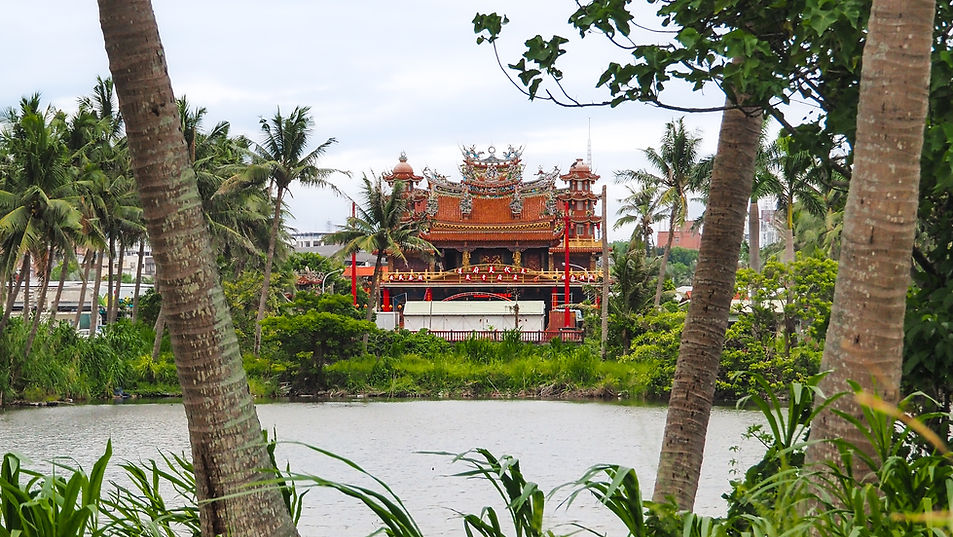
If you’re visiting Hualien in late spring or summer, you might want to dedicate one day of your stay to whale and dolphin watching. From around May to October every year, dolphins can be seen near Hualien, and if you may even spot orcas, humpback whales and pilot whales. Read more on Taiwan East Coast tourism's website and please, if you do decide to go whale and dolphin watching, take time to research the operators to make sure they’re conducting tours in an ethical and sustainable manner.
With the rest of your day, you might just want to explore the city a bit. Take a stroll along the coastal path before cutting back in towards the city centre, stop at the baseball batting cages to take a few swings for a very reasonable price, and check out some of the temples dotted around. The railway cultural park is also a cute place to spend half an hour and we thoroughly recommend Gaby and Gaston, just outside the park, as one of the best places to find coffee and a sweet pastry in this city.

On your second day, we’d recommend hopping on a local train for an hour and visiting Chishang. Famed for its glorious and expansive rice fields, this beautiful rural town is the perfect place to rent a bike and spend a day cycling through landscapes you likely won’t have encountered anywhere else. The roads are suitable for even novice cyclists and, if you really don’t feel comfortable on a bike, there are even electric buggies to rent as an alternative. There are some excellent vegetarian restaurants in Chishang too, along with our favourite bar/café/art gallery in all of Taiwan, so consider eating and drinking here before catching a later train back.

On your last day, you could think about a hike in one of two destinations. Liyu Lake is a picturesque spot in easy reach by car, but also accessible by a reliable – if not very frequent – bus service. A walk around the lake won’t be too strenuous and can be completed in as little as 90 minutes, but you could spend longer by exploring some of the trails that take you further into the trees surrounding the path. If you’re lucky, you might even spot a monkey or two on your visit.
If you want a hike closer to the city, Sakul Waterfall is a good alternative. We walked all the way from the city centre to the start of the hike, but we’d recommend driving or cycling up if you can as there’s little to see for much of the walk to the start of the actual walking trail. Once there, your hike will reward you with beautiful views back towards Hualien from the highest points of the trail. The trails were lovely and well-marked, only moderately strenuous on a warm day, and we were able to see macaques here too.
One last note on the Hualien part of the itinerary: we’re assuming that Taroko Gorge will remain mostly closed when you visit Hualien. If more trails have reopened, you might want to adjust this itinerary to spend another day in Hualien.
Day 7: Taichung
Read our guide to Taichung to find out more about how to spend a day in the city.

This is the trickiest bit of this itinerary. Don’t worry, we’ll suggest a less travel-heavy and more relaxing alternative for how to do it differently below.
Getting to Taichung from Hualien will take just over four hours by train. While that is a long time, it’s a necessary part of the schedule if you want to see a good amount of all of the north, south and mountainous middle of Taiwan in a two-week stay.
Aim to take an early-ish train arriving at around 1pm: that will give you enough time to tick off many of the stops we recommend for a whistlestop tour of Taichung in this guide.
You’ll be able to visit the store where bubble tea was invented, wander alongside the manicured stream and river paths running through the city, and stop at Miyahara for an indulgent dessert or two in the evening.
Days 8-9: Sun-Link-Sea & Xitou OR Sun Moon Lake
Read our guides to Sun-Link-Sea & Xitou and Sun Moon Lake to find out more about what to see and where to stay


From Taichung, you can take a bus directly to one of the hidden gems of Taiwan – for western tourists, at least – and spend a day or two exploring Sun-Link-Sea and Xitou. Alternatively, you could also take a bus from Taichung to one of the busiest and most popular tourist attractions in Taiwan, Sun Moon Lake.
It’s safe to say that Sun-Link-Sea has the prettiest waterfall in the country. Popular with tourists from elsewhere in Taiwan and China, we encountered very few other western visitors when we visited the magnificent Qinglong Falls. What this waterfall lacks in height and volume compared to some of the world’s most famous falls, it makes up for in its tranquillity and crystal-clear waters.

We found the crowds quickly dispersed even a couple of minutes’ walk from the two main sights, the waterfall and the flower garden, and had one of our favourite walks of our time in Taiwan going down the hill from the waterfall back towards the bus stop and car park at the base of the trail. The walk is steep, but fortunately a shuttle bus is available to take you up the hill. On the way down, it’s a walk that anyone with average or better mobility can do.
While Sun-Link-Sea is slightly the better of the two walks, it’d be worth seeing at least some of the Xitou Nature Education Centre before setting off on the next leg of your trip the next day. While Xitou is best known for its colourful monster-themed decoration, it’s not lacking in natural beauty either. Slightly lower in the mountains than Sun-Link-Sea, you can enjoy a different view of the hills from the day before – looking back up at the mountain faces encircling you, rather than all the way down across the slopes and forests.

If getting off the beaten track feels a little intimidating or you’re just keen to see the most popular spots in Taiwan, you could visit Sun Moon Lake instead. It’s the largest lake in Taiwan and is famous for its extremely picturesque setting nestled between rolling green mountains. You can take a boat trip around the lake to visit different the towns along its shore, go for a cycle around the lake edge, or visit temples with stunning lake views. As one of the most popular tourist destinations in Taiwan, Sun Moon Lake is much more developed than Sun-Link-Sea and you may find it a bit crowded at peak times.


While both are beautiful, we personally preferred Sun-Link-Sea for its incredible unspoilt nature, plentiful hiking options, and more authentic feel. If you’re a little nervous about navigating less touristy routes or are scared of the terrifying creatures which call Xitou Monster Village near Sun-Link-Sea their home, then you may feel more comfortable staying at Sun Moon Lake.
From either Sun Moon Lake or Sun-Link-Sea, head to Kaohsiung to continue this two-week Taiwan itinerary.
Days 10-11: Kaohsiung
Read our guide to Kaohsiung to find out more about what to do, where to eat, and what to know before visiting


Another slightly longer journey awaits you on day 10. Hey, I warned you this itinerary is not for the faint-hearted.
From Sun Moon Lake, take the tourist shuttle bus in the morning back to Taichung High-Speed Rail station, then jump on another bus towards Kaohsiung, our favourite city in Taiwan. Alternatively, you can take a direct bus from Sun Moon Lake to Kaohsiung. It takes a bit longer but means you don’t need to transfer, and the scenery along the journey is beautiful.
Alternatively if you’ve visited Sun-Link-Sea, you can hop on the tourist bus which will take you directly to Kaohsiung.

While in Kaohsiung, you might want to relax after the last few days’ activities. If so, spend some time gently wandering around the Kaohsiung Harbour Area and stopping in at some of the independent shops housed within its old wharf buildings. You can also take a short ferry ride across to Cijin Beach and, if you have it in you, do the short walk up to the lighthouse for views over the city. Otherwise, take a seat at one of the bars or restaurants and unwind by the coast.
Another restful alternative is to stop at Zuoying Lotus Pond, which you can get to quickly and easily by taxi – or Uber – from the High-Speed Rail station. Either explore the Dragon and Tiger Pagodas by the lake or do as we did and relax with a coffee at Shoreline Roastery instead.
There are plenty of options for dinner in Kaohsiung, including everything from Michelin Star fine dining to a plethora of night markets waiting to be explored. Liuhe night market is a strong option, with plenty of stalls to choose from and a bustling atmosphere. If you arrive by MRT, check out the Dome of Light on your way – a colourful art installation inside Formosa Boulevard MRT station.

On your second day, you might want to walk up Shoushan – or Monkey Mountain, as it’s also known. The mountain offers the best views of Kaohsiung, has easy-to-walk boardwalk paths, and is covered in monkeys. As we’ve warned in our guide on where to see monkeys in Taiwan, this population has been overexposed to humans and they do sometimes come into conflict with visitors.
That shouldn’t put you off the walk – just stay calm and let them see you have nothing they want, and they’ll move on quickly enough – but it does mean it’s not our favourite spot for simian spotting in Taiwan. Instead, you’ll find that in our last destination.

As an alternative to Monkey Mountain, you could use this day to visit the Fo Guang Shan Buddha Museum instead. Around an hour on the bus from Kaohsiung, Fo Guang Shan is the biggest Buddhist temple complex in Taiwan. It features a huge golden Buddha statue, an avenue of pagodas, beautiful zen gardens, and plenty of smaller shrines and temples to explore, as well as museum exhibits. You can make your own mind up about how to feel about this, but it even has its own Starbucks on site.
After your stay in Kaohsiung, it’s time to visit the tropical Southern tip of Taiwan.
Days 12-14: Kenting
Read our guide to Kenting to find out more about what to do, where to eat, and what to know before visiting

Finish your trip in one of the very best parts of Taiwan.
Kenting is a stunningly beautiful area, blessed with extraordinary national parks and some beautiful beaches – where I’d recommend you take a well-earned break on your first day, after catching the bus from Kaohsiung in the morning. Nanwan Beach (or South Bay, as it’s also known) and Baishawan Beach are the two best options.
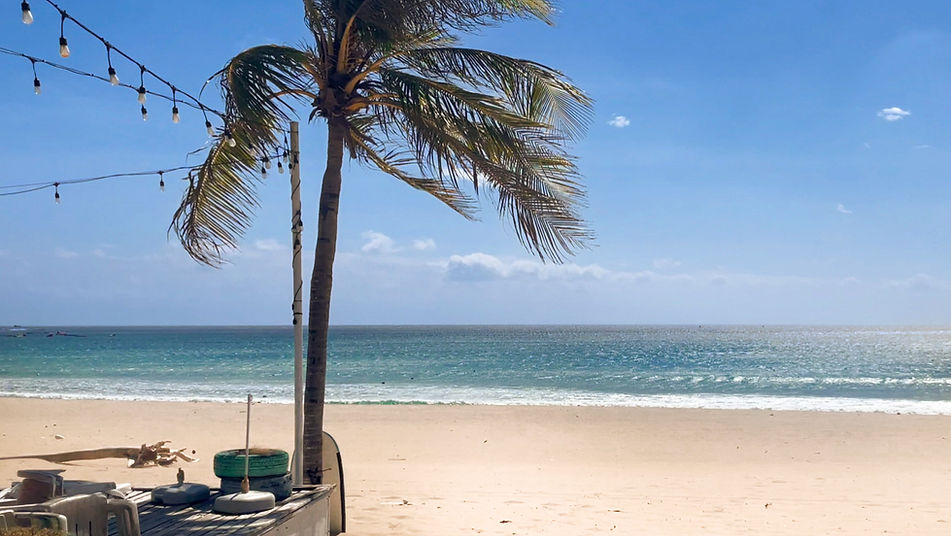
On your second-to-last day, hopefully you feel rested enough for one last big walk – this time in Kenting National Forest Recreation Area. We’ve written extensively about what there is to see here in our guide to Kenting, but the overall idea is stunning views over the forest towards the coast, and interesting plants, butterflies and coral rock formations at each and every step of your walk around the park.
You’ll also find just as many Formosan Rock Macaques here as on Shoushan in Kaohsiung, but without the intimidating behaviour. These monkeys have not been over-exposed to or fed by humans, meaning they keep a respectful distance from visitors – all of whom we saw maintain the same respect for the animals too on our visit.


On your last day, head straight to Kaohsiung airport. A bus service is available, but if you have a car or can afford the around £60 for an Uber, save yourself some time and stress and start your journey home that way. There are international flights available, or if needed you can fly back via Taipei.
How to do it differently
Read more of our guides to Taiwan, including advice on what to know before you go

This is a pretty intense two-week schedule. It’s honestly what I would try to do with two weeks in Taiwan, but it might not be what I should do.
If you want to build in some more rest days and cut out the longest journeys, the easiest way would be to remove Hualien from the itinerary. Liz and I both loved our stay in Hualien, and Chishang would be a particularly tough cut from the holiday schedule, but it would cut out a lot of travel time to go directly from Taipei to Taichung, before going to Sun-Link-Sea.
With the extra days, you can build in some extra rest time in Kenting, Sun Moon Lake, or even in Taipei when you might still be a bit jet lagged.


Alternatively, use the extra time to take a day trip to Fo Guang Shan Buddha Museum while staying in Kaohsiung, to add an extra day trip from Taipei, or to spend more time exploring Taichung.
Of course, the other way to do this itinerary would be to do it completely in reverse, taking the journey from Kaohsiung Airport to Kenting to start your holiday there. If you also leave Hualien out of this back-to-front schedule, you might be able to consider a visit to Alishan instead of Sun-Link-Sea and Xitou. While we couldn’t manage a visit to Alishan even in our much longer stay in Taiwan – the challenge of getting there by public transport, competition for train tickets, and lack of hotel options for those without a car proved too much – it would be possible to do a Taichung – Alishan – Taipei route, before flying home from the capital.
Alternate itineraries
Days 1-3: Taipei - Days 4-5: Taichung - Days 6-8: Sun-Link-Sea and Xitou - Days 9-11: Kaohsiung - Days 11-14: Kenting
Days 1-4: Taipei - Day 5: Taichung - Days 6-8: Sun-Link-Sea and Xitou - Days 9-11: Kaohsiung - Days 11-14: Kenting
Days 1-3: Kenting - Days 4-6: Kaohsiung - Day 7: Taichung - Days 8-10: Sun-Link-Sea and Xitou OR Alishan - Days 11-14: Taipei
Got a bit more time to spare? Check out our 7-day itinerary and 28-day itinerary for more Taiwan travel inspiration.
Related posts


