
A guide to El Castell de Guadalest
An oasis of history and nature, a short drive from the beach resorts
Posted by: Josh, 28 March 2026

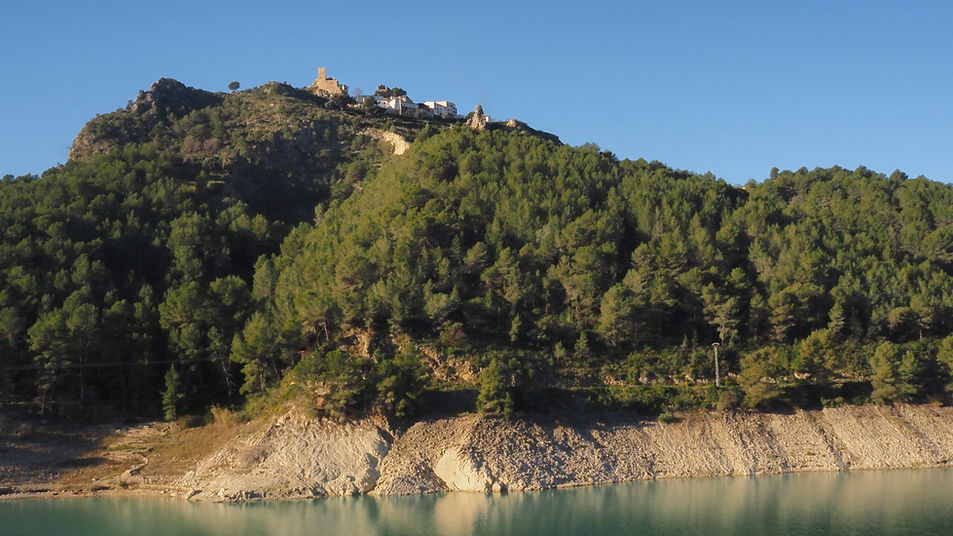
El Castell de Guadalest, perched high on a hill above a reservoir in Costa Blanca's mountains
While the Costa Blanca may be famous – or infamous – for overbuilt cities and towns which cater for sun-seeking tourists, a bit of careful pre-holiday planning can uncover some destinations for those looking for a bit of peace, quiet, and time spent exploring the great outdoors.
Our favourite of all these places is El Castell de Guadalest (or, as it's often known in short, Guadalest), a small village in the mountains built around an 11th-century castle, the Castillo de San José, perched somewhat precariously atop a hill.
A 30-to-45-minute walk out of the village is the Guadalest Reservoir (or Embalse de Guadalest), built in the 1960s and now one of the best spots for a half-day’s walk in this region.
For those staying on the coast in the vicinity of Benidorm without a car, visiting Guadalest takes a bit of planning, with only one direct bus there and back each day and most tours only offering around a couple of hours to stay in the village. But with a little forward planning, you can avoid the crowds, see everything there is to see, and still have time to make the bus back.
This is our guide to visiting Guadalest.
Contents

Getting to Guadalest without a car
If you have a car, getting to Guadalest is easy – it's a quick half an hour drive up from the coast. If you want to visit Guadalest using public transport, it's much trickier. There is only one bus each way per day and the return journey towards Benidorm is at a slightly awkward time.
The only bus from Benidorm to Guadalest, the number 16, departs at 10.10am, while the only bus back leaves at 1.30pm - meaning you'll only have a couple of hours to explore if you take a return bus trip.
Though it's a little more expensive, we think the best way to visit Guadalest is to take a taxi or Uber to arrive early in the morning, then take the bus back towards Benidorm in the early afternoon. From there, you can use the tram or local bus services back if you're staying in one of the smaller towns or villages nearby.
While you could instead take a guided tour or join one of the tour buses that take in Guadelest, you will not have enough time to see the village and walk down to the reservoir while you’re there. Although the views from near the castle are stunning, we think hiking around the reservoir is the best way to spend a day in Guadalest.

Liz and I spent a while thinking about the other ways we could visit, wondering whether we should take the bus from Benidorm and reserve a taxi or Uber home in advance, whether we should join a tour, or whether we should even look at staying a night in Guadalest so we could take the bus there on one day, then the bus home on the next.
Our hotel, in the small coastal town of Altea, explained we could not book a taxi in advance. And, speaking to an Uber driver the night before we visited, we were told we could expect to pay around £60 to hire an Uber to take us back from Guadalest. We also found that we would have to wait at least two hours from booking to our driver turning up – not ideal, unless you know precisely when you’re likely to finish your hike or see all the things you want to see in the village.
Booking an Uber from Altea to Guadalest, however, was much cheaper - making it by far the best way to do a day trip. Expect to pay between £20 and £25 for an early-morning ride or slightly less if you’re travelling from Benidorm, where most Ubers seem to congregate.
Aim to set off as early as you’re able to. We were out of the hotel by 7am and arrived in Guadalest by 7.30am to find the village completely empty, except for a few local cats perched on the rocks and scurrying through the deserted streets. We found a place to watch the sun rise from a spot looking towards the coast, then set off to the reservoir to start our hike.

Hiking at the reservoir
Before starting your hike, take a bit of time to appreciate the village and find a spot to watch sunrise over the surrounding mountains and the reservoir. While the best photo spots will be crowded by late morning, early arrivals can enjoy panoramic views in total tranquillity. We only saw one other person on our stroll round the village before setting off down the hill towards the reservoir.
Getting to the reservoir is easy, particularly in the cool morning air. You’ll be walking along roads, with no pavements but with room to the side to stay out of the way of passing cards, with around half the walk in the shade of the woods and half in the glare of the warm South Spain sun.
Once at the reservoir, you can follow the loop in either direction. We crossed the dam to start from the far edge, which turned out to be the right call for an early morning walk.

Much of your walk will be on roads, rather than designated walking paths, but there are more pedestrianised parts of the trail on the side of the reservoir nearest to the road you walk down from Guadalest village. If you start on the far side and set off early in the morning before most visitors are out of bed, you’ll likely enjoy a more peaceful walk interrupted by only a half-dozen or so passing motorbikes, cars or farm vehicles.
If, like me, you tend to convulse at any suggestion of getting out of bed early, I’m sure you’ll be needing reassurance that all of this effort is worthwhile. Well, I’m happy to guarantee you that it is. The whole area is beautiful, and the trail around the reservoir is a very easy walk, with mostly unimpeded views of the waters and the hillside villages that overlook it throughout.
We visited in early March, when the almond blossom trees along short stretches of the trail were in full bloom, the sandstone hills around us were still patched with greenery, and the air was crisp and cool. If you’re planning to visit later in the year, when temperatures start to soar and the mountains are parched and dry, bring plenty of water and make sure to take the occasional break in the forested areas that will offer you relief from the sun for parts of your walk.
You’ll have just enough time to make it to the bus stop and get in the queue 15 minutes early, as you’re unlikely to get a seat if you arrive just before it departs.
Lastly, don’t be put off by reviews or blogs which talk about the steepness of the hike; that’s only true of the last 10 minutes or so of your trek back to the village once you’re finished at the reservoir. It is a tough finish to your walk but anyone with average mobility and fitness will manage it just fine, if a bit sweatily.
Alternatively, if you’ve driven to Guadalest and want to avoid the steep path to and from the reservoir, there is a small car park on the edge of the dam.

Other things to do in Guadalest
If you’ve made it back to the village with plenty of time before you catch the bus back, or if you’ve driven and want to make a full day of it, there are a few things to do in the village.
The church and the castle would be where most people start. There isn’t all that much of the castle left – the original parts are nearly 1,000 years old, remember – but you can get a particularly good view over the lake and tickets cost only 4€ for adults and 2€ for children at time of writing.
As for the church, the Our Lady of Assumption church, it’s – gosh, how do I make this interesting? – small and pretty similar to most other churches in the region. Guess I couldn't make it interesting, after all. Pop in for a look around if you’re not familiar with the style of the churches in this area of Spain, or if you simply find them more interesting or fulfilling to visit than I do, but don’t worry about skipping it if neither of those things apply to you.
The other attractions are museums dedicated to miniature models and dolls houses. We didn’t visit but fans of small things will have a lovely time, probably.


These streets are much busier once the tour buses arrive, so aim to get to Guadalest earlier in the morning
Other places to visit in Costa Blanca
Calpe Salt Lake (Salinas de Calpe): Calpe, which you can reach via tram from Benidorm, Altea, and other stops along the way, is another big and bustling tourist resort. But nestled inside the city is a man-made salt lake, created by the Romans and still maintained and protected to this day, which is home to a colony of flamingos. While you’ll see more of these deeply, deeply strange birds – or “cute”, as Liz insists on saying – in summer, some of them are year-round inhabitants of the lake. If you’ve never tried taking pictures of flamingos before, expect to spend a while lining up your best shot. In my brief experience, they seem to spend 90% of their lives with their heads underwater.

Peñón de Ifach: The other main attraction in Calpe. You’ll need to reserve tickets to go to the top of this steep walking trail, as visitor numbers are capped to prevent overtourism. We didn’t go all the way up; parts of the higher sections of the path are quite precarious (i.e. a very thin rocky trail with no barriers) and not recommended for novices. If, like us, you’re worried about possibly falling off a steep rock into the sea, you can walk part way up the trail and still appreciate some amazing views over the coast. Stop just before you get to the tunnel – the trail up until this point is wide enough for two people to pass each other, has fences, and is fairly well maintained.

Altea Old Town: We stayed in Altea for our few days on the Costa Blanca. While the newer parts of the town near the beach are quite built up, albeit not to the same extent as nearby Benidorm or Alicante, the old town is a picturesque and generally quieter area to spend some time. Walk between the whitewashed buildings to the various lookout areas that allow you to soak in views of the coast and realise why the Costa Blanca first became such a draw to tourists before all the high-rise hotels sprung up.


Albir Lighthouse (Faro de l'Albir): The lighthouse itself isn’t all that much, but the walk along well-maintained paths from Altea along the coast to your destination is perfectly pleasant. If you’re very, very lucky – luckier than us – you might be able to spot the dolphins that inhabit the waters near a fish farm, which is easily spotted from the area around the lighthouse.
Final thoughts on Guadalest
Liz's final thoughts
As soon as I read about Guadalest, I knew I wanted to visit. The landscapes here were incredibly dramatic and beautiful, the town was completely charming, and it was lovely to shake off the winter cobwebs with a nice walk in the sun. Initially when Josh suggested we should get up early enough to be there for sunrise I assumed he'd finally lost his mind, but it was absolutely magical having the place to ourselves, just eating our supermarket breakfast and watching the sun rise over the reservoir.
Josh's final thoughts
Guadalest, along with Altea's Old Town, was the best surprise of our short break in the South of Spain this year.
While the Costa Blanca brings to mind images of packed beaches and drinks in the sun - which, for some of you, might be just what you're after - there's plenty in the region for those looking for a quieter vacation away from the crowds.
It takes a little bit of effort to get to Guadalest, but I'd recommend it to anyone planning a holiday nearby.
Related posts


