
A guide to São Miguel, the Azores
A land of happy cows and spectacular nature
Posted by: Josh, 19 February 2026
The Azores’ largest island, São Miguel is packed with beautiful scenic points, cute towns, cows, and plenty of adventurous activities.
While we’d been warned by some residents of Terceira that São Miguel is very built up, that’s only true in comparison to the even wider open spaces that you can find elsewhere in the Azores.


The two sides of São Miguel: Small, cute towns and scenic green spaces
For most tourists, you’ll find São Miguel to still be the picturesque island getaway you’ve been searching for… with the benefit of a few more things to do in its capital city, Ponta Delgada, than on the Azores’ other islands.
This is our guide on what to see and how long to spend in São Miguel, starting with Ponta Delgada and on to our favourite places to hike, explore and rest in elsewhere on the island.
Contents
Ponta Delgada
Things to do
Ponta Delgada is São Miguel’s capital and a great place to base yourself to explore the island. It’s an ideal spot to stay for tourists hoping to get around the island without renting a car, with buses to the main sights departing from outside the tourism office throughout the day. If you’re planning to hire a car, make sure your hotel has a car park since street parking may be limited.


Ponta Delgada has more than enough things to do and places to eat and drink to keep any tourist happy for a few days
Whale watching
While the Azores’ central group of islands are the best for whale and dolphin watching, you can still have a great experience taking a tour from São Miguel… if the weather cooperates.
There are a good number of responsible, ethical tour operators, offering to take you out on either catamarans or zodiacs – large, rigid inflatable speedboats which can bring you closer to the whale and dolphin pods without causing them any distress.
The downside of a zodiac is the quality of the ride, which is wet, bumpy and – I’m sure this goes without saying – lacking in bathroom facilities. A catamaran is the better choice if you’re looking for comfort and a solid base to capture pictures from, and the only choice for those with certain health and joint conditions. Liz and I are both mostly healthy young(ish) adults, but even we found the ride at the front of the zodiac a bit of a challenge. We sat right at the front of the boat which is the bumpiest spot, and it was fun at first, but by the end of the trip we were sore, drenched, and tired.
All that taken into account, I’d still go out on a zodiac again the next time we’re in the Azores. We only saw dolphins on our trip from São Miguel, partly because the overcast conditions made spotting whale pods harder for the spotters back on the island, but taking the zodiac meant the animals could come so, so much closer to us than if we had taken a catamaran tour. Our drivers cut the engines when we were a few tens of metres away from the pods and allowed the dolphins to come to us – and they did, time and again, swimming right underneath and next to our boat.


The dolphins near São Miguel seemed happy at the tour boats' arrival, swimming up to the side of us to see what we were up to
Even once we slowly started moving again, the pod followed alongside us for a good few minutes before finally losing interest and getting on with their dolphin days.
Though the tours aren’t cheap, they aren’t prohibitively expensive either. We booked for a second tour a few days later, though it was sadly cancelled as a result of the Azores’ ever-unpredictable weather taking a turn for the wetter and windier. This is always a risk, so if you'd like to try this activity I'd recommend scheduling it near the start of your trip so you'll have time in case you need to reschedule.
Botanical gardens
The Azores have a perfect combination of rich volcanic soil, plenty of sun, and also plenty of rain, meaning plant life absolutely thrives here. There are several botanical gardens around the island which show off some of the incredible diversity of Azorean plant life (it’s more interesting than it sounds!), and a lot of imported species that thrive in this climate.
There are two botanical gardens that you might want to visit in Ponta Delgada, both of which we enjoyed even more than the more heralded Parque Terra Nostra in Furnas. I suspect that won’t be the case for most tourists, as Parque Terra Nostra is the most well-designed of the gardens we saw in in São Miguel, but the variety of plant life we were able to find in Ponta Delgada’s gardens appealed to us just that little bit more.


The Antonio Borges Botanical Garden is famous (to us) for being the home of the world's most perfectly round and yellow duckling
If we could only pick one to visit again, we’d probably choose Jardim Botânico António Borges. Why? While it’s very similar in style to Jardim Botânico José do Canto (more in a second), entry is free and it also houses the lovely Jardim Natural Food & Coffee, which makes it an excellent place to visit at lunch and brunch times. Not only does this café serve good food and good coffee, but it also served good entertainment in the form of the waiting staff’s efforts to herd a persistent and adorable clutch of chickens, chicks, ducks and ducklings away from the outdoor tables, where they were waddling around looking for scraps of food.
As for Jardim Botânico José do Canto, you’ll have to pay five euros to get in. We’d happily pay that much just to see the banyan trees in this garden, which – without as much competition for space – have even more staggering root structures than others we’ve seen in tropical countries on previous travels.


Always wanted to have a small chicken sit on your foot? Jardim Botanico Antonio Borges is the place for you. If you're less keen on the idea, indoor seating is available
Pineapple plantations
We went to Plantação de Ananás dos Açores for no other reason than that it was the easiest to walk to.
Basically, you’re going to wander through some greenhouses and see pineapple plants in various stages of growth. You’ll learn a little bit about the cultivation process and how they use smoke to encourage the plant to fruit at the right time.
But mostly you’ll be there to taste the pineapple, in many different forms – around half of them alcoholic.
Our visit to the pineapple plantation and the pineapple drinks we had there inspired one of our favourite cocktails to make at home, which we call a Stanley Pineapple – made by caramelising chunks of pineapple in brown sugar and cardamom, allowing them to marinate in dark rum overnight, then serving with lapsang souchong tea topped up with a little Azorean pineapple liqueur.

Azorean pineapples. Funny looking, but delicious
Places to eat in Ponta Delgada
A couple of places stood out from our time in Ponta Delgada. It’s not always easy to find vegetarian food in Portugal and the Azores is no different, but these are good options.
We really enjoyed the food and the quality of service at Rotas da Ilha Verde, a vegetarian and vegan restaurant which serves flavourful food in generous portions, in a cute and friendly atmosphere. You’ll need to book in advance to get a table here, but we were able to make a reservation when we arrived for a few days later.
Alternately, if you’ve been in Portugal and the Azores for a while and you’re looking for something a bit more familiar, Nonna's Teeth & Tomatoes is one of those rare pizzerias that stands out among others we’ve fallen into on our travels. Even on a busy night for the restaurant, our food arrived quickly and tasted great too.
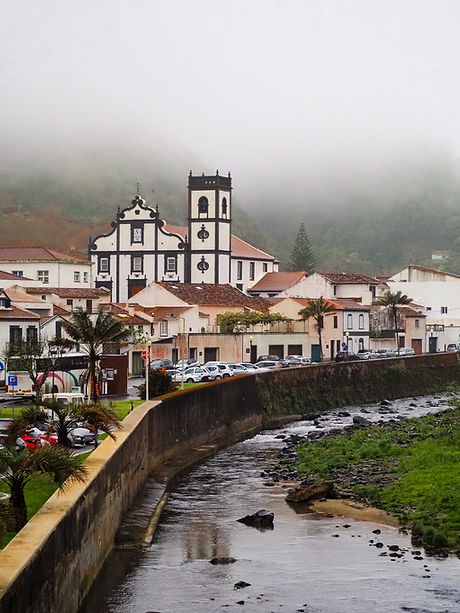

The weather makes a big difference to how much you can do on a particular day. Our planned hike from Povoacao, near Furnas, was a bit of a washout. But we were much luckier with the conditions for our day walking around Sete Cidades
The hugely popular A Tasca stood out for the wrong reasons. The restaurant doesn’t accept reservations, and you should expect long queues unless you arrive a little before opening time – we arrived ever so slightly after opening and waited around half an hour for our table. Those a few minutes later than us faced much longer waits.
While the restaurant offers vegetarian options on its menu, there’s no guarantee they’ll be serving all of them on any given day – and no warning at the door if they aren’t. I had to settle for a couscous salad, unexpectedly soaked in lemon juice, with no warm vegetarian options being served that day. Liz found her meat dishes to be tasty enough, but not worth the wait.
We were hoping to try O Calcheta, which has very good reviews and a rotating, seasonal menu which featured a couple of vegetarian dishes at the time. Unfortunately, it was closed during our stay. If you manage to get there and try it, please leave a comment and let us know what it was like!


Places to drink
Pineapple juice, Pina Coladas, and pineapple margaritas from freshly harvested fruit at the plantations might be all you need to drink in Ponta Delgada.
If you’re looking for a bit more variety in an alcoholic drink, Résvés Street Bar serves nice, creative cocktails at a reasonable cost, (certainly for anyone who’s used to paying London or even Lisbon prices). It’s conveniently located close to a coin laundry, making it a nice spot to kill time while you freshen up your clothes.
As for coffee, it’s hard to beat the aforementioned Jardim Natural Food & Coffee for the mix of good drinks, pleasant brunch food, and garden views. We didn’t manage to find a great cup of coffee in the town centre, of a similar standard to the one we had at Melita on the island of Terceira, so please let your fellow readers know in the comments if you do.


Sete Cidades
If you’re planning a holiday in São Miguel, you’re almost certainly going to want to visit Sete Cidades while you’re there.
Formed by the collapse of a volcano around 22,000 years ago, the highlight of most people’s visits to Sete Cidades - which translates to ‘Seven Cities’ in English, though nobody alive today can be certain why - will be the spectacular view from Vista do Rei from where you can see the Lagoa Azul and Lagoa Verde, and the slopes on each side of the gigantic caldera the lakes have formed within.
There’s far more to see than just that one view though, and it would be easy to spend a full day hiking to all of the sights on the Sete Cidades viewpoint trail.

Sete Cidades is even better in person than in pictures. We'd recommend a visit to anyone
If you have the time and the budget for it, it’s worth thinking about finding a place to stay in the town of Sete Cidades – particularly for visitors using public transport to get around, who might want to spend longer here than the infrequent buses allow for day-trippers.
We’ve written more about what to see in Sete Cidades and how to get there in this detailed guide.
Furnas
While Sete Cidades is the more famous location, our time in Furnas was our favourite part of our visit to the Azores.
Known for its volcanic hot springs and hiking routes by Lake Furnas, this small town in the mountains is a tranquil and beautiful place to spend a few restful days.
We loved our hike around Lake Furnas so much that we had to go back to the lakeside again before leaving, to see the still waters in the early-morning sun before most of our fellow tourists had made it out of bed.
While here, you can also visit the perfectly manicured Parque Terra Nostra Botanical Gardens and stop by at any one of the many restaurants in town to tuck into a Cozido das Furnas, a local specialty stew cooked in metal pots dug into the ground around the volcanic fumaroles at Lake Furnas.
We spent three nights here and felt we’d done all there was to do by the time we left, but you could happily stay longer if you’re wanting a peaceful escape from city life.
Read more about what to do, where to eat, and how to get to Furnas in our detailed guide.


If you read our guide to Furnas, you can also see some of the cats who've made these fumaroles by Lake Furnas their home
Lagoa do Fogo
If you were to only look at a picture of Lagoa do Fogo on Google, you might be forgiven for wondering whether you really need to visit it.
The lake alone can’t compare to the view from Vista do Rei in Sete Cidades, with the green and blue lakes contrasted against each other. But it’s still fairly spectacular viewing, especially on a partly sunny day, as the clouds cast ever-shifting shadows onto the lake’s surface.
And better still are the views you’ll see to either side of you, as from the Miradouro da Barrosa you can see acres upon acres of grassy hills leading all the way down to the coastal towns and villages including Vila Franco do Campo and to the Atlantic Ocean beyond them.
We visited Lagoa do Fogo on a guided tour, booked through Viator at short notice. Try to pick a day when the forecast looks mostly favourable (while the Azores famously packs four seasons into most days, some have more summer than autumn and winter) as the winds at the viewpoints are quite bracing even on a sunny day.


Lagoa do Fogo is pretty enough all by itself, but it's the views down to the coast that really make it worth the visit
Ribeira Grande
A small town on São Miguel’s North coast, Ribeira Grande is home to one the Azores’ better sandy beaches.
Praia do Areal de Santa Bárbara’s big waves make it one of the best spots in the Azores to try surfing, if you’re adventurous, or just for a nice stroll through the sand if you’re a coward, like me.
Like anywhere else you’ll visit in the Azores, you have to be quite brave to go swimming outside of the summer months when the ocean has warmed up a bit. It’s not a recommended swimming spot for children or inexperienced swimmers, given the strength of the waves and the currents and, I imagine, the risk of being bonked on the head by a passing surfer if you don’t keep your wits about you.


Surfing season in São Miguel runs from November to April. If you visit later in summer, like we did, expect the beach to be quieter
Using public transport in São Miguel
Buses will take you to most of the main tourist spots on São Miguel, but I would still recommend renting a car if you can drive and feel comfortable on the road overseas.
Mobiazores has a list of current bus schedules and routes. I’d strongly advise picking up a current timetable from the Ponta Delgada tourism office when you land in São Miguel to check that the information online is up-to-date.
Some bus routes will require you to transfer partway through your journey, but it’s always worth asking your bus driver if that’s really the case when you board. On our way back from Sete Cidades, for instance, we were expecting to have to change bus midway through our journey back but the bus we were on simply changed its route number at a particular stop instead.
We found it simple enough getting everywhere we needed to go without a car. If you don't feel confident navigating the bus schedules, Get Your Guide and Viator host a good number of tour providers offering trips to almost anywhere you might want to visit. Alternately, visit the tourism office in Ponta Delgada and ask for their advice on getting around.


Final thoughts
Liz's final thoughts
We weren’t sure what to expect from São Miguel after several people told us they thought it was quite built up and touristy, but we ended up falling in love.
Although it is more developed than other places in the Azores, Ponta Delgada still isn’t huge, with a walkable town center and charming historical streets. On top of that the views at Sete Cidades and the more rural vibes in Furnas were unforgettable. São Miguel is the type of place we can definitely see ourselves returning to time and time again.
Josh's final thoughts
I can’t imagine any future trips to the Azores that won’t involve at least a few more days on São Miguel.
It has so much to see, a good number of restaurants and bars in the capital, and I absolutely fell in love with Furnas.
As the easiest place in the Azores for us to reach from the UK, it’s a perfect starting point for anyone looking to travel onwards to any other islands.
Related posts


